



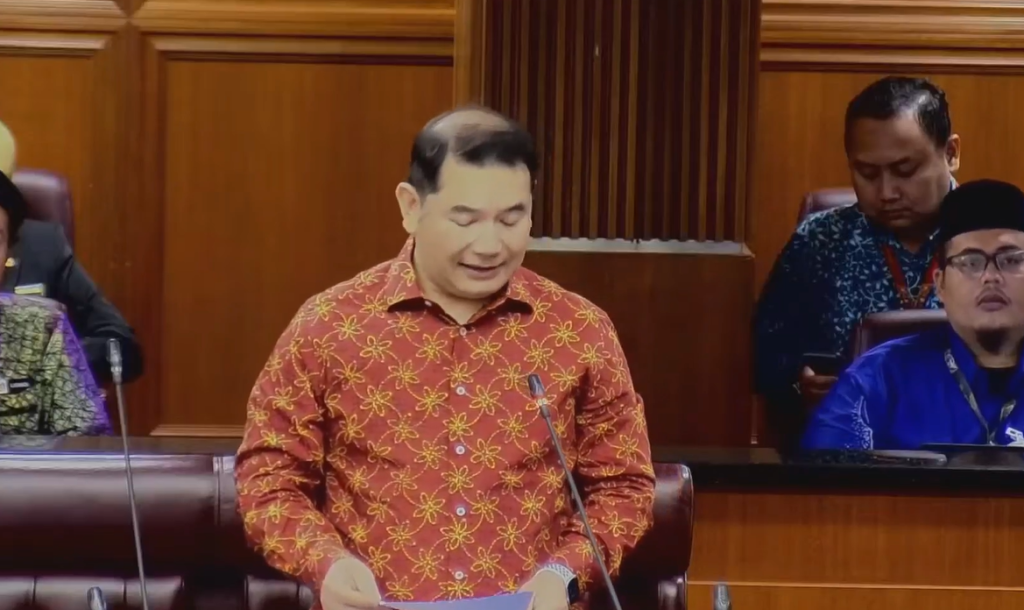
KUALA LUMPUR, March 20 – Malaysia’s oil and gas services and equipment (OGSE) sector must shift towards renewable energy to stay competitive, says Economy Minister Datuk Seri Mohd Rafizi Ramli.
Rafizi urged industry players to broaden their scope beyond traditional markets and capitalize on opportunities in solar power and sustainable aviation fuel.

Rising Global Interest, Locals not ‘Keeping Up’
Malaysia’s energy sector has seen increasing attention from international investors, especially from Japan, following the launch of the National Energy Transition Roadmap (NETR). However, Malaysian companies have shown a lack of readiness to bridge the gap between demand and supply.
Rafizi pointed out that while the country has strong technical capabilities, many businesses have yet to position themselves effectively to take advantage of the shift towards renewable energy.
He emphasized the need for local firms to proactively seek opportunities rather than remain reliant on the traditional oil and gas market
Future Government Plans
To close this gap, the government aims to develop at least 10 OGSE firms into key renewable energy players by 2030. Rafizi stressed the importance of diversification, citing waste-to-fuel innovations as one way for businesses to expand revenue streams and reduce reliance on traditional oil and gas services.

“Our goal is to highlight how innovative projects, such as converting plastic into fuel, can be integrated to create new revenue streams,” he said.
As the majority of the sector consists of small and medium-sized enterprises (SMEs), the government is introducing a Regional Champions Programme to help firms expand beyond domestic markets.
The programme will focus on companies that:
- Earn at least RM50 million in revenue
- Have maintained profitability for five consecutive years
- Are free from legal and financial issues
Rafizi said the initiative will support companies through financing, business matchmaking, and dealmaking opportunities, enabling them to grow through mergers, acquisitions, or joint ventures.
“The idea is to play an identification and matchmaking role for opportunities. We support the dealmaking process by enabling access to financing and marketing,” he explained.
Financial Challenges calls for Transformation
The OGSE industry has faced significant financial strain in recent years, with investment levels dropping to a historic low.
“Before the pandemic, the industry secured around RM3.3 billion in approved investments back in 2019. By 2022, that figure had plunged to just RM363 million—an alarming 89% decline,” Rafizi highlighted.
He stressed that this downturn underscores the urgent need for restructuring and long-term sustainability within the sector.


A Turning Point For The Industry
The Mid-Term Review (MTR) introduces 26 strategic initiatives aimed at revitalizing Malaysia’s OGSE industry, ensuring it remains resilient and globally competitive. These initiatives focus on industry development, financing, technology adoption, talent growth, and export capabilities.
With ongoing geopolitical uncertainties and shifting global energy trends, Rafizi underscored the importance of adapting to market changes and positioning Malaysia as a strong player in the evolving energy landscape.


