



The Case of Professor Solehah and Malaysia’s Intellectual Crisis
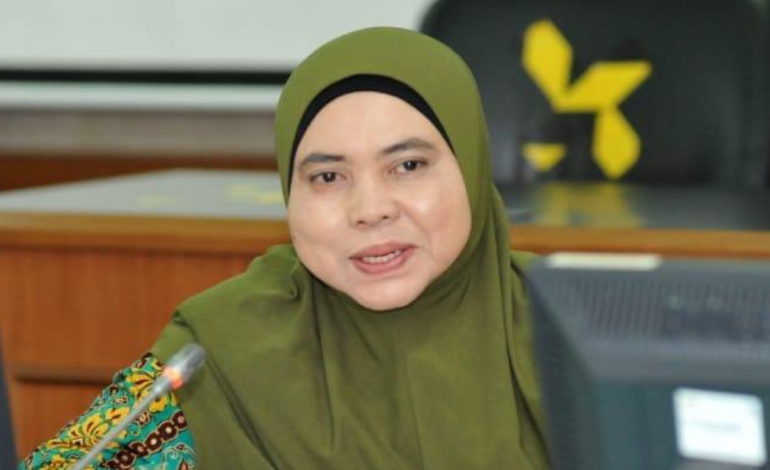

When Academia Fails Itself: The Case of Professor Solehah and Malaysia’s Intellectual Crisis. It started as a viral curiosity — a professor claiming that the ancient Romans learned shipbuilding from the Malays.
Before the laughter died down, another clip surfaced: the same professor once declaring that ancient Malays could fly, and even taught the Chinese their “flying kung fu.”
At first, it was easy to treat these as social media oddities — academic eccentricities blown out of proportion by an impatient internet. But the more we looked, the less this resembled a joke. Because the question is no longer about one professor’s wild theories — it’s about how Malaysia’s academic institutions have allowed such claims to thrive unchallenged.
From Shipbuilding to Flying Malays — A Pattern, Not a Slip
The professor at the centre of this controversy, Prof. Dr. Solehah Yaacob of the International Islamic University Malaysia (IIUM), is a linguist by training.
Her expertise lies in Arabic grammar and semantics, not in maritime archaeology, aeronautics, or ancient civilisations.
Yet, over recent years, she has confidently stepped into arenas far beyond her academic field — offering grand civilisational theories without evidence, and presenting them under the banner of scholarship.
Her “Romans learned shipbuilding from Malays” lecture was recorded and uploaded — perhaps by a disbelieving student — and quickly went viral.
A previous podcast appearance where she claimed that ancient Malays could literally fly followed soon after.
Individually, these statements might seem absurd. But collectively, they reveal a deeper rot — a culture that rewards titles over truth, and loyalty over logic.
The System That Breeds Silence
It’s tempting to treat this as a one-person fiasco. But the real story lies in the system that produced, promoted, and protected such academics.
How does a scholar who makes demonstrably false claims rise to the rank of Professor at a leading public university?
What peer review processes exist — and more importantly, who enforces them?
Are promotions decided by genuine merit and research integrity, or by seniority, internal politics, and deference?
Many within the Malaysian academic community privately admit that quality control in higher education has eroded.
Publishing quantity often outweighs publishing credibility.
“Safe” research — politically convenient or culturally flattering — tends to be rewarded, while critical or uncomfortable inquiry is quietly sidelined.
The result?
A generation of scholars who learn to perform intellectual orthodoxy rather than pursue intellectual honesty.
When Social Media Becomes the Auditor
In a perverse way, social media did what the institutions refused to do: it exposed nonsense to public scrutiny.
A short clip from a lecture hall did more for academic accountability than years of internal peer review ever did.
But this is a double-edged sword. The same platforms that mock pseudoscience also amplify it.
When outlandish claims go viral, Malaysia’s entire academic reputation takes a hit — especially when international outlets like The Straits Times and South China Morning Post pick up the story.
And the silence from within academia only deepens the embarrassment.
Instead of open correction, universities often hide behind bureaucratic statements — “we are reviewing the matter” — as if credibility were a public relations issue rather than a scholarly one.
National Pride vs. Scholarly Proof
It’s easy to see where this impulse comes from.
For decades, Malaysia has wrestled with the colonial narrative that Southeast Asia contributed little to human progress.
So when someone claims the Malays taught the Romans or the Chinese, it scratches an old itch — the desire for cultural vindication.
But pride cannot replace proof.
Our real maritime heritage — the jong, lancaran, and prau that once ruled the Indian Ocean — already offers a legitimate source of national pride.
We don’t need to rewrite history to celebrate that.
When academics cross from historical evidence into myth-making, they don’t elevate Malay civilisation; they trivialise it.
The Cost of Academic Impunity
What’s most troubling is not that one person made unscientific claims — it’s that no one within her institution stopped her earlier.
Was there no faculty oversight?
No departmental discussion about the responsibility that comes with professorial rank?
No concern for how such statements might reflect on the university or the nation?
This speaks to a deeper moral fatigue within parts of our academic system — where titles are shields, and accountability is optional.
A university that tolerates pseudo-history under its roof does not just fail its students; it fails society.
What Needs to Change
This episode should be a turning point, not a meme.
If Malaysia wants to rebuild academic credibility, we must confront the uncomfortable truths:
- Reform promotion criteria — Professorship must be earned through verified scholarship, not bureaucratic longevity.
- Strengthen peer review — Independent panels, not in-house committees, should evaluate controversial research.
- Encourage internal debate — Universities must protect scholars who challenge nonsense, not those who produce it.
- Educate the public — Teach Malaysians the difference between myth, hypothesis, and evidence-based history.
A Closing Reflection
When a professor claims that Malays could fly or taught the Romans how to build ships, it’s easy to mock her.
But the real tragedy is this: our education system let her reach that microphone unchallenged.
A nation’s intellectual credibility depends not on the loudest voices it produces, but on the wisdom of the institutions that shape them.
If Malaysia truly values knowledge, then our universities must choose — to remain comfortable echo chambers, or to become genuine custodians of truth.
Because the world is watching.
And as the saying goes: those who cannot tell myth from history will soon lose both.
By Seng Tat, The Civic Mind
About the Author
Seng Tat, The Civic Mind writes on Malaysia’s evolving public discourse, from governance and culture to the state of education and civic maturity.
He is an event producer and commentator committed to fostering critical thinking and public integrity in Malaysian society.


