



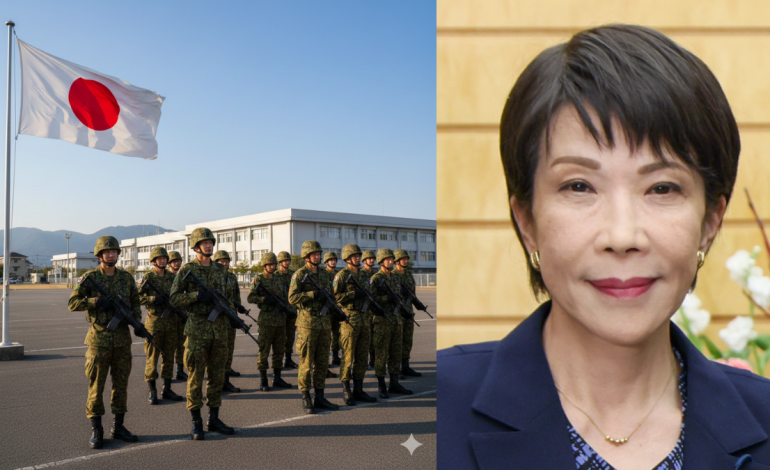

When Japan elected Sanae Takaichi as its first female prime minister, commentators rushed to celebrate the symbolism. But symbolism can be a distraction. What Asia is witnessing today is not a feminist breakthrough — it is the most serious transformation of Japan’s security posture in half a century.
And Malaysia, like the rest of ASEAN, needs to pay attention. Takaichi is no ordinary leader. She is the first Japanese prime minister in decades who is both economically expansionist and unapologetically hawkish. Her early policy speeches read like a roadmap for a country preparing for a long, difficult geopolitical contest.
This is Japan stepping out from the post-war shadows — faster, louder and more confidently than most of Asia expected.
The post-war brakes are coming off
Takaichi entered office declaring that Japan faces “the most severe security environment since the end of the war.” But unlike her predecessors, she is not using that line to justify caution. She is using it to justify acceleration.
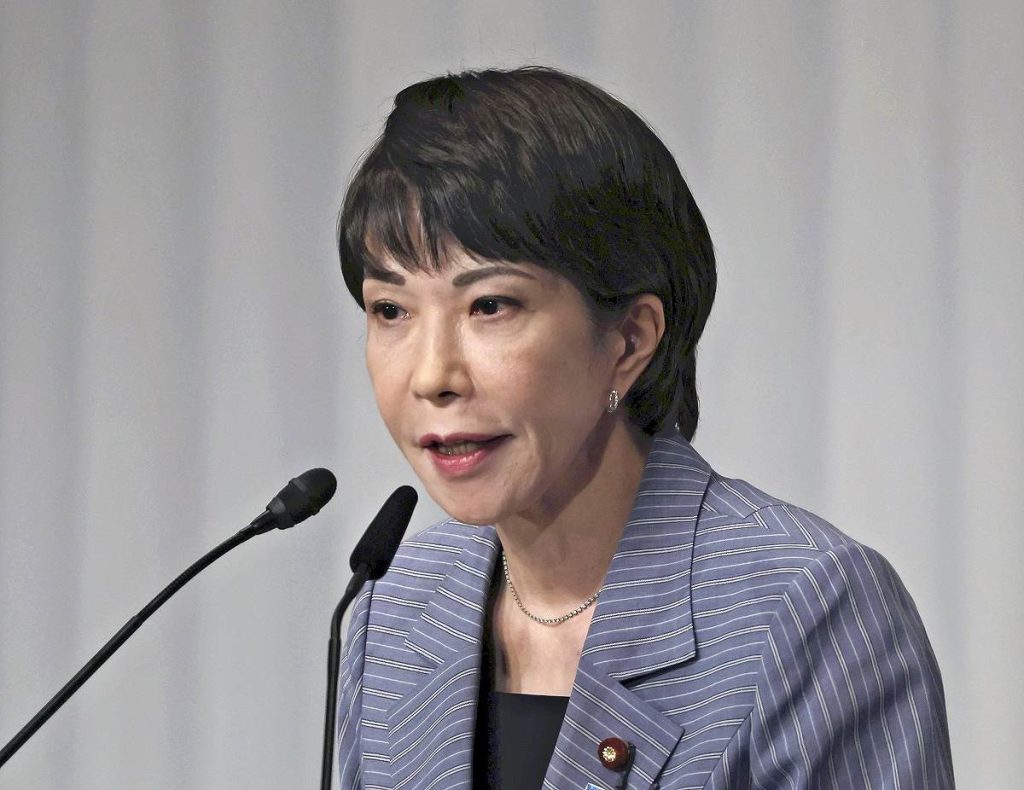
Among her first acts:
- Doubling defence spending to reach 2% of GDP immediately — years ahead of schedule.
- Announcing a revision of the National Security Strategy, focusing on counterstrike capabilities.
- Pushing for constitutional revision to formalise Japan’s military status.
- Suggesting that a Taiwan contingency could justify Japanese intervention under its self-defence laws.
In Malaysia, we often think of Japan as the region’s “soft power giant” — calm, economic, industrial. But that Japan is slowly but surely giving way to something more assertive.
Behind the historic first woman PM is a very familiar ideology
Takaichi’s rise is historic. Her ideology, however, is not.
She is deeply tied to conservative and revisionist circles in Tokyo. She has:
- visited the Yasukuni Shrine;
- defended traditionalist positions on identity and history;
- signalled support for harder stances on territorial issues like Dokdo/Takeshima.
This is not the language of post-war pacifism. This is the language of a nation ready to shed old limitations. It does not mean Japan is reviving pre-war militarism. But it does indicate the erosion of political and psychological restraints that kept Japan’s strategic posture modest for decades.
And whenever restraints erode, strategic ambition tends to grow.
Asia’s strategic balance is shifting — quietly but decisively
1. China will respond harder than Japan expects
Beijing reads every Japanese defence increase as a challenge. Takaichi’s decision to double defence spending and speak openly about Taiwan will guarantee a sharper Chinese reaction — more naval drills, more pressure near disputed islands, more force in diplomatic language.
That’s a recipe for a long-term Northeast Asian standoff.
2. South Korea sees old ghosts resurfacing
Dokdo/Takeshima is more than rocks in the sea — it is a fuse wired directly to Korea’s historical memory. Under Takaichi, Japan risks provoking one of its most sensitive neighbours, just as Washington needs Tokyo–Seoul unity to manage North Korea and balance China.
3. North Korea will escalate for attention
Pyongyang thrives on tension. A hardened Japan gives it the excuse it wants to conduct more missile tests — including over Japanese airspace.
4. ASEAN will feel the squeeze
A more assertive Japan means:
- more expectations from Washington;
- less room for neutral positioning;
- and more intense geopolitical competition in Southeast Asia.
For Malaysia, that means less diplomatic quiet time and more hard choices.
What this means for Malaysia and Southeast Asia
Malaysia has historically enjoyed a comfortable space — friendly with Japan, economically engaged with China, and diplomatically neutral.
That comfort zone will shrink as:
- Japan hardens its stance,
- China reacts,
- the Taiwan Strait becomes a high-risk zone, and
- the US pressures allies and partners to “pick a side” on strategic issues.
To prepare, Malaysia must:
1. Strengthen maritime and strategic planning
The South China Sea is already contested. A Taiwan crisis would double our pressure points overnight.
2. Diversify economic and technological dependencies
If Japan and China drift into sustained economic rivalry, supply-chain shocks will hit us first.
3. Engage Japan early — before its posture becomes entrenched
ASEAN must shape the regional conversation now. Once Japan and China enter a long-term hardened rivalry, ASEAN influence diminishes.
4. Build a united ASEAN front
No single Southeast Asian state can handle a sharper Japan–China rivalry alone. A fragmented ASEAN is a vulnerable ASEAN.
A final warning — for Asia, not just Japan
It is too simplistic to claim Japan is reviving its imperial past. History does not repeat that neatly.
But history echoes — and those echoes matter.
What we are seeing under Takaichi is the emergence of a Japan that:
- spends more on the military than at any time since 1945,
- speaks more openly about conflict scenarios,
- aligns more tightly with US strategic aims, and
- is less constrained by the pacifist ethos that shaped its post-war identity.
Asia cannot afford to ignore those signals. Japan is changing. Regional politics are shifting. And the geopolitical balance that kept Asia mostly stable for decades is no longer guaranteed. Malaysia cannot react only after events unfold. We must anticipate them — and act before the tide turns.